

Do Tongue Ties Only Affect Babies?
While tongue ties are often identified during infancy, untreated oral restrictions can continue to impact structural development, eating habits, and overall health well into childhood and adulthood. Because the tongue plays a vital role in shaping the palate, guiding jaw growth, and managing the swallow reflex, restricted tongue mobility can lead to long-term compensations.
Airway & Facial Development
A tongue tied to the floor of the mouth cannot rest naturally against the roof of the mouth (the palate). This proper resting position is essential for expanding the upper jaw and nasal passages. Without it, the palate often develops high and narrow, limiting nasal airflow and leading to chronic mouth breathing, sleep-disordered breathing, upper airway resistance, and poor sleep quality.
Teeth Alignment & Orthodontic Issues
Proper tongue posture acts as a natural expander for the dental arch. When restricted, overcrowding, high palatal arches, and misaligned teeth (such as open bites or underbites) are far more common. Orthodontic treatments may also be more prone to relapse if the underlying tongue-tie is not addressed.
Eating & Feeding Difficulties
Restricted tongue movement affects the ability to sweep food around the mouth, form a neat food bolus, and swallow efficiently. Children and adults with tongue ties often struggle with hard, chewy, or dry solid foods, present as "picky eaters," or rely on drinking liquids to wash down meals.
Speech & Articulation Impacts
Precision speech requires significant tongue elevation, dexterity, and range of motion. Restricted tongue movement can cause persistent clarity issues, mumble-like speech, or difficulty pronouncing specific sounds (such as R, L, S, TH, Z, T, D), often leading to tongue fatigue during prolonged conversation.
What is a Frenotomy?
A frenotomy (sometimes called a frenulectomy or tongue-tie release) is a quick, safe, and routine procedure that releases a restricted band of tissue—known as a frenulum—under the tongue, lip, or cheek. When this tissue is too short, thick, or tight, it anchors the mouth's structures and prevents full range of motion. During the procedure, the restrictive tissue is carefully clipped or released using precision surgical scissors or a specialized laser. The process takes only a few minutes, involves minimal discomfort, and allows for quick healing and immediate use of the tongue or lip.
The primary goal of a frenotomy is to restore natural mobility and function so the mouth can work the way it was designed to. Families and individuals choose to pursue a release to address several key benefits:
-
Relieve Infant Feeding Pain & Frustration: For nursing or bottle-feeding infants, a release allows the tongue to extend, lift, and cupping the nipple properly. This reduces painful latches, decreases swallowed air (gassiness/reflux), and helps the baby transfer milk efficiently.
-
Support Healthy Jaw & Palate Growth: Releasing a tongue tie lets the tongue rest naturally against the roof of the mouth. This upward pressure acts as a natural expander, encouraging proper facial, palate, and dental arch development as children grow.
-
Improve Breathing & Sleep Quality: Proper tongue posture supports open nasal airways. Releasing a restriction helps reduce chronic mouth breathing, snoring, and sleep disruptions in both children and adults.
-
Make Eating & Swallowing Comfortable: For older children and adults, a release makes it easier to chew, manage, and swallow textured or dense solid foods without choking or gagging.
-
Enhance Speech Clarity & Oral Comfort: A frenotomy gives the tongue the dexterity needed to articulate tricky speech sounds cleanly and eliminates the muscle fatigue or jaw strain caused by constant compensation.
What To Expect During a Frenotomy Visit?
-
-
Assessment & Consent: We evaluate your baby's oral restrictions and review consent, including before-and-after chart photos.
-
Safety Positioning: Baby is safely swaddled and their head is held gently and firmly by a team member.
-
Procedure: A scissor release is performed by lifting the tissue and gradually releasing the frenum to achieve a complete (anterior and posterior) release. Lip or buccal releases are completed in a similar manner.
- Feeding & Recovery: Baby is brought back to you immediately after procedure to feed and rest. Our team will observe and make sure Baby is feeding well before sending you home.
-
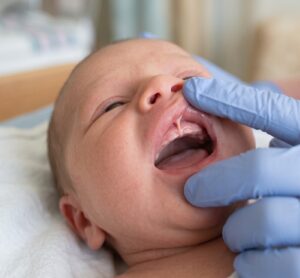
How Is Pain Managed During The Procedure?
-
In-Office Comfort: Topical numbing and infant acetaminophen or sucrose are applied prior to the release.
-
At-Home Care: Continuing infant acetaminophen for several days as directed helps ease muscle fatigue and reduces the risk of reattachment. Liquid Arnica is also provided at your visit to use during healing.
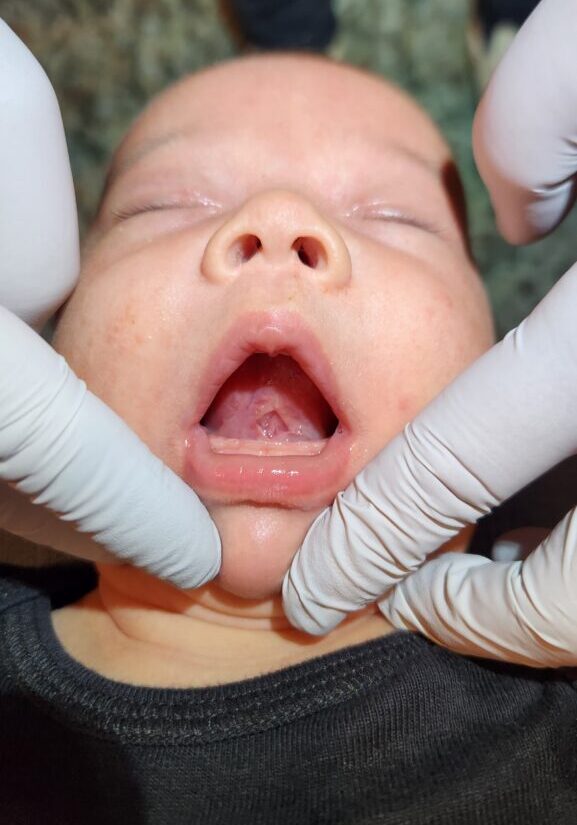
Aftercare and Stretches
-
Stretches: Active wound care (stretches) must be performed every 3–5 hours (at least 6 times daily) to prevent tissue reattachment. Tongue stretches typically continue for 4–6 weeks, while lip and Buccal stretches may require a shorter duration.
-
Why 4–6 Weeks? Tissue remodeling continues beneath the scab, with a primary phase of wound contraction occurring at 3 weeks. Stretches must continue past this mark to prevent late reattachment.
- Weekly follow-ups: You will work with our lactation and feeding team to monitor healing, and ensure the tongue is able to function as desired. They will tailor exercises to fit your babies unique recovery!